
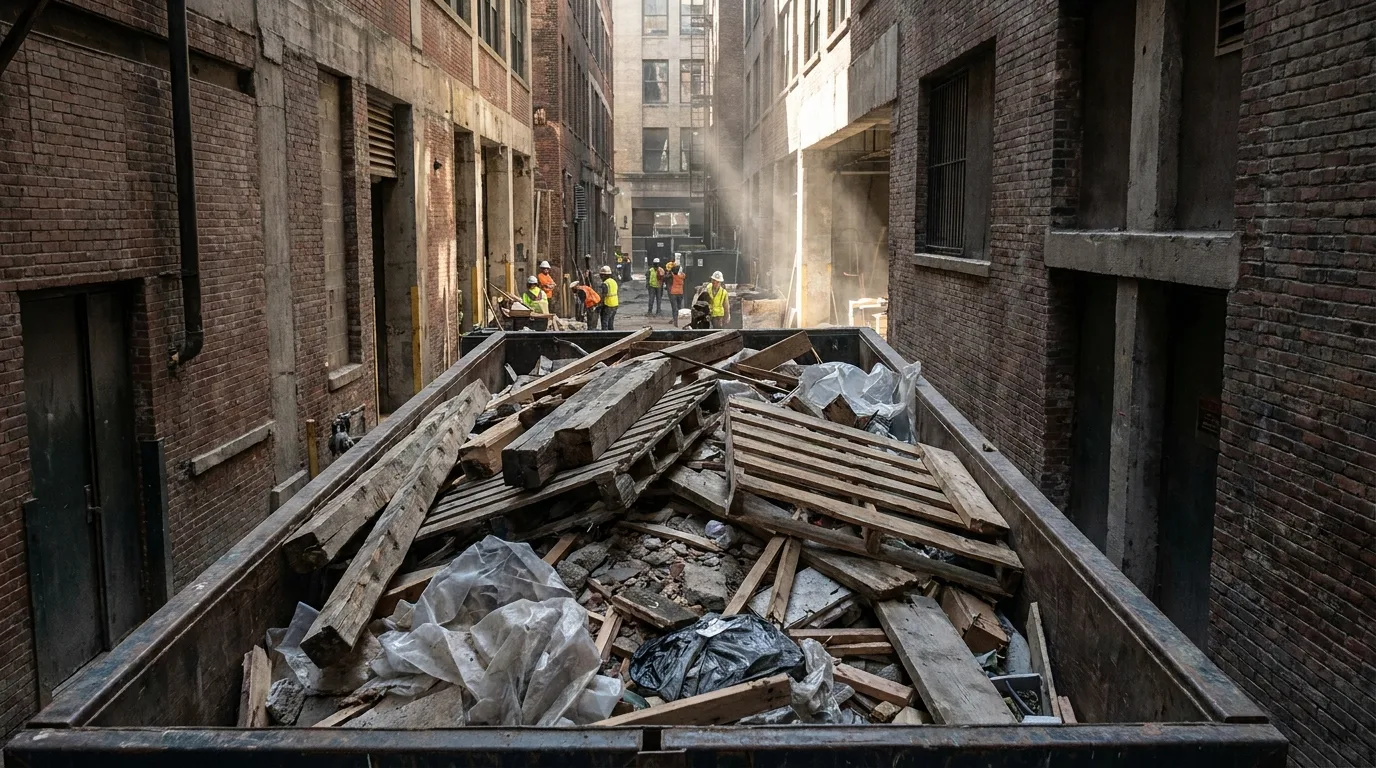
What items are banned from a roll-off dumpster?
The core no list is the same on most job sites: tires, car batteries, propane tanks, paint cans with liquid still inside, motor oil, refrigerators and air conditioners with refrigerant still in the lines, and anything labeled hazardous waste. Asbestos siding or tile falls into this group too, along with fluorescent tubes because of the mercury inside. If you are clearing a house before a home renovation porta potty goes in for the crew, separate these out before the construction dumpster rental even arrives. Wet paint needs to dry out or get taken to a hazardous waste drop-off; dried paint cans with no liquid sloshing are usually fine. Electronics with batteries built in, like old laptops, often get rejected for the same reason as loose batteries. Norfolk crews working near the water on projects around Chesapeake, 23.0 miles south, run into this constantly with old boat batteries and marine paint. Check the specific list on your dumpster rental cost quote, because haulers vary slightly on borderline items like treated lumber.
Why do weight limits matter as much as banned items?
Overloading a dumpster costs more than the rental itself, and it can get the load rejected at the transfer station. A standard 20 yard container has a weight cap built into the rental agreement, and concrete, dirt, brick and shingles hit that cap fast because they are dense even in small volumes. Check dumpster weight limits before loading heavy debris, and if the job is mostly concrete or soil, ask about a dedicated heavy debris box instead of cramming it into a general container. A 10 yard dumpster rental works for a bathroom gut job; a full kitchen or a small addition usually needs the 20 yard dumpster rental or larger. See dumpster sizes and dimensions for how each size handles mixed loads versus single-material fills. Overfilling past the fill line is its own problem, separate from weight, because an open truck cannot legally haul a load that is stacked above the rim on the road back out of Norfolk.
Do I need a permit if the dumpster sits on the street?
Placement on a driveway or private lot usually needs no city paperwork, but a dumpster sitting in the public right of way is a different question, and that needs confirming with the city before delivery. Norfolk's own placement rules are not something we will guess at here. Call ahead and ask, or check dumpster permit requirements for what to have ready when you call. A roll-off delivery needs about 60 feet of straight clearance behind the truck to drop the container safely, so measure your driveway or curb space before scheduling. If the only option is street placement, plan for that permit conversation early, not the morning of delivery. This matters more on tight lots near downtown Norfolk than it does out toward Hampton, 12.6 miles north, where driveways tend to run longer.
What happens if banned material shows up in the load?
Haulers sort loads at the transfer station, and a banned item found mixed in can mean a rejected load, a return fee, or a request that you pull the item back out before pickup. This is more common than people expect with mattress springs, propane tanks tucked under debris, or a car battery left in a pile of scrap metal. Review what cannot go in a dumpster again before the crew starts loading if this is a demolition job with mixed trades on site, since drywall crews and electricians throw away different things. A little sorting up front, maybe a five-minute walk around the pile, avoids a second delivery fee entirely.
Banned Items at a Glance
| Category | Examples | Alternative |
|---|---|---|
| Hazardous liquids | Wet paint, motor oil, solvents | Local hazardous waste drop-off |
| Refrigerants | Fridges, window AC units, freezers | Certified appliance recycler |
| Batteries | Car batteries, lithium packs | Battery recycling center |
| Tires | Car, truck, ATV tires | Tire retailer take-back |
| Combustibles | Propane tanks, aerosol cans | Hazardous waste facility |
| Medical/asbestos | Sharps, asbestos siding or tile | Licensed abatement contractor |
If the project involves any of the items above in volume, pair your dumpster order with a temporary fence rental to keep the sorted pile secure between pickups, and keep a handwashing station rental nearby if crews are handling anything hazardous under OSHA 1926.51(f)(1), which requires washing facilities where employees apply paints, coatings, herbicides or insecticides. That rule is not about general debris handling, but it applies directly if your crew is stripping old paint into the dumpster.
Can I put furniture and mattresses in a dumpster?
Yes, most furniture and mattresses are accepted in a standard roll-off, though some haulers charge extra per mattress because of separate disposal handling. Couches, dressers and bed frames break down fine into a 20 yard dumpster rental. Ask your provider directly if mattress fees apply to your order.
Can construction debris and household trash go in the same dumpster?
Generally yes, but check first. Mixed loads with drywall, wood and old household junk are common on renovation jobs. The concern is weight and banned items, not mixing categories, so keep hazardous material separated regardless of what else is in the load.
Does yard waste count as banned material?
No, yard waste like branches and soil is usually allowed, but soil and wet organic material get heavy fast and can push a load over its weight cap. Large-volume yard debris sometimes works better as its own dedicated pull.
What if I am not sure an item is allowed?
Call before you load it. A five-minute question avoids a rejected load and a return fee. Most haulers would rather answer up front than sort out a mixed load with buried hazardous material at the transfer station later.
Can I rent a dumpster for a septic or grease trap cleanout?
No, liquid waste needs a different service entirely. Septic and grease trap material goes through septic pumping service or grease trap pumping, not a roll-off container, since dumpsters are built for solid debris only.
Next step
Get a delivery date
Tell us the address, the dates and the headcount. We size the order and confirm the route.