
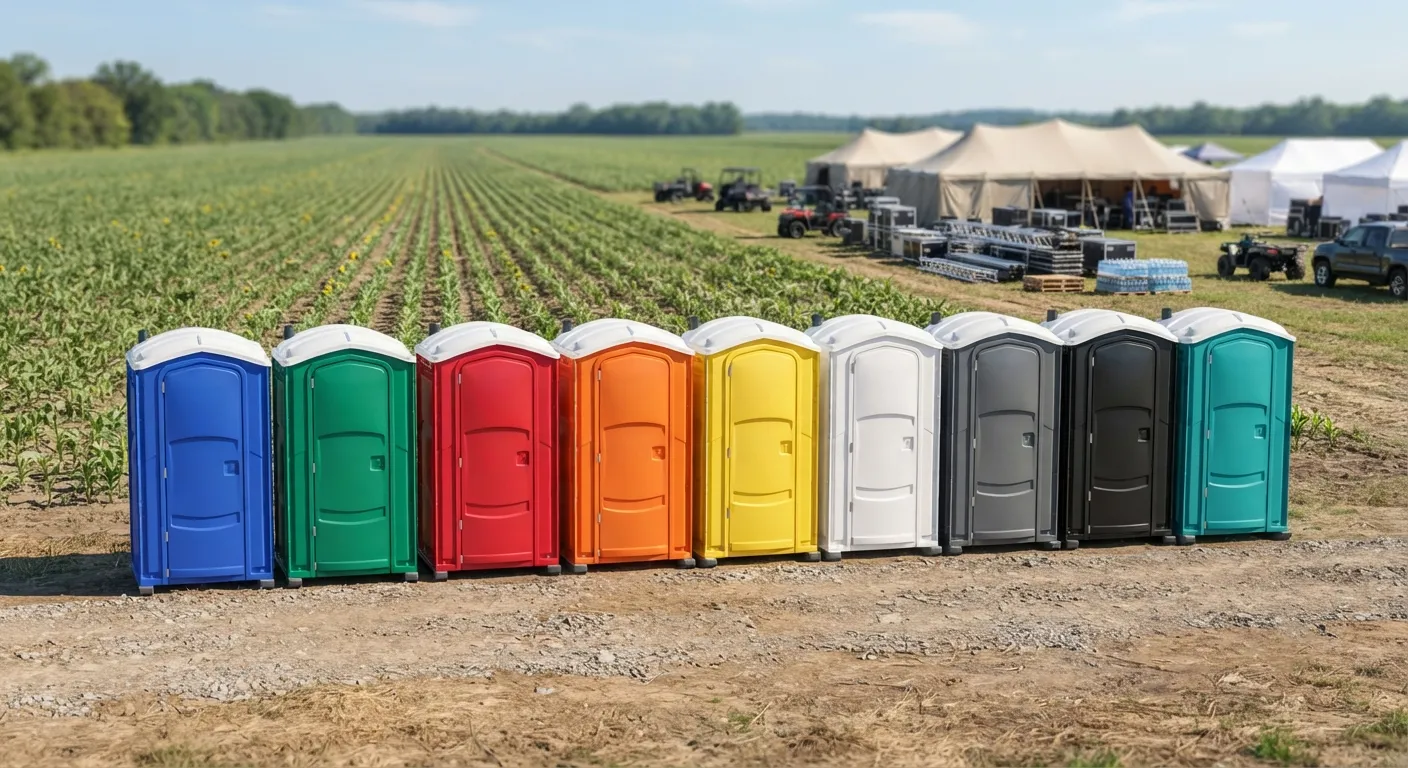
What restrooms does a farm need for field workers?
Field crews fall under OSHA 1928.110, which sets the bar at one facility per 20 hand-labor employees, and it has to sit within a quarter mile of wherever people are actually working. That is different from the construction standard, OSHA 1926.51(c), which most contractors know from job sites. Farms move. A crew picking the north field this week might be three fields over next week, and Norfolk Porta Pros builds routes around that instead of asking growers to guess. A standard porta potty rental covers most row-crop and orchard operations, and pricing runs by the day, week or month depending on how long the harvest window runs. Potable water has to be available too, under OSHA 1926.51(a)(1), and we can pair a unit with a handwashing station rental so workers have both in one stop. For farms without a fixed labor camp, an emergency porta potty rental gets a unit out fast when a crew shows up on short notice. Livestock operations near Norfolk that also run seasonal U-pick or agritourism need to think about visitor counts separately from worker counts, since the two ratios do not overlap. Check the full breakdown on how many porta potties do I need before the season starts, because guessing low means a mid-harvest scramble.
How much does farm restroom rental cost in Norfolk?
Pricing depends on how many units, how long the season runs and how far the delivery truck has to travel over unpaved farm roads. A standard unit runs in the ranges below, and multi-unit farm accounts usually land on weekly or monthly billing rather than day rates.
| duration | low | typical | high |
|---|---|---|---|
| day | $100 | $150 | $350 |
| week | $130 | $200 | $500 |
| month | $125 | $200 | $325 |
Delivery fees apply on top of the unit rate and scale with distance and access difficulty; a farm 20 miles out costs more to service than one inside Norfolk city limits. Full detail on delivery zones and add-ons lives on the porta potty rental cost page, and if you are comparing day rates specifically, see porta potty rental per day. Longer seasonal contracts usually work out cheaper per week than booking short blocks over and over, and the monthly porta potty rental page walks through that math. Farms running produce stands or agritourism events on top of field labor sometimes need a nicer unit for customers while keeping standard units for crews; a deluxe flushable porta potty works well for that split. If a farm sells direct to the public, an ADA accessible porta potty matters too, since ADA Standards section 213.2 requires at least one accessible unit in any cluster, and never fewer than one no matter how small the cluster is.
Can I get restrooms for a farm event or festival?
Yes. County fairs, corn mazes, pumpkin patches and farm-to-table dinners all need restroom counts sized for guests, not just labor crews, and that math is different from the field-worker ratio. A fall festival pulling a few hundred visitors over a weekend needs several units clustered near parking rather than spread across the property, and our county fair restrooms page and festival restroom rental page both cover typical layouts. Weekend event pricing for a standard unit runs higher than a weekday rental because of the compressed service window. For farms hosting weddings or larger gatherings in a barn or open field, a restroom trailer rental gives guests flimit-free stalls with real fixtures, and a 2 stall restroom trailer handles smaller gatherings while an 8 stall restroom trailer covers larger ones. Farms that also host weddings specifically should look at wedding restroom rental for guest-count planning. Norfolk sits inland enough that seasonal flooding rarely disrupts delivery, but placement still needs at least 36 inches of clear route width under ADA Standards section 403.5.1 if the event expects any guests using mobility devices. Check our porta potty placement guide before laying out event day traffic flow.
How often are farm units serviced during harvest?
Weekly service is standard, matching the ANSI/PSAI Z4.3 baseline of one visit per week for up to 10 users over a 40 hour week. High-traffic harvest crews or festival weekends may need twice-weekly pumping. We adjust the route once we know headcounts and hours.
Do farm workers need handwashing stations separate from toilets?
Yes, when work involves pesticide or herbicide application, OSHA 1926.51(f)(1) requires washing facilities specifically for that contaminant exposure. Pair a portable sink rental with toilet units on any crew spraying chemicals, and skip the hand sanitizer stations for that use since sanitizer does not meet the standard.
What size unit works best for a remote field location?
A standard unit measures about 44 by 48 inches on the ground with a 60 to 70 gallon holding tank, small enough for a pickup or trailer to drop in a field edge. Farms with rough or muddy access should mention that when booking so we route the right delivery vehicle.
Can Norfolk Porta Pros service farms outside city limits?
Yes. We already route to Hampton, 12.6 miles north, and Chesapeake, 23.0 miles south, and farm accounts further out are common. Delivery fees scale with distance, so mention your location when requesting a quote so pricing reflects the actual drive.
Do I need a permit for farm restroom placement?
Placement rules can depend on where units sit relative to property lines and public roads, and that needs confirming with the city rather than assumed. See porta potty permit requirements for what to check before delivery day, or just request a quote and we can flag anything that needs a call first.
Next step
Get a delivery date
Tell us the address, the dates and the headcount. We size the order and confirm the route.